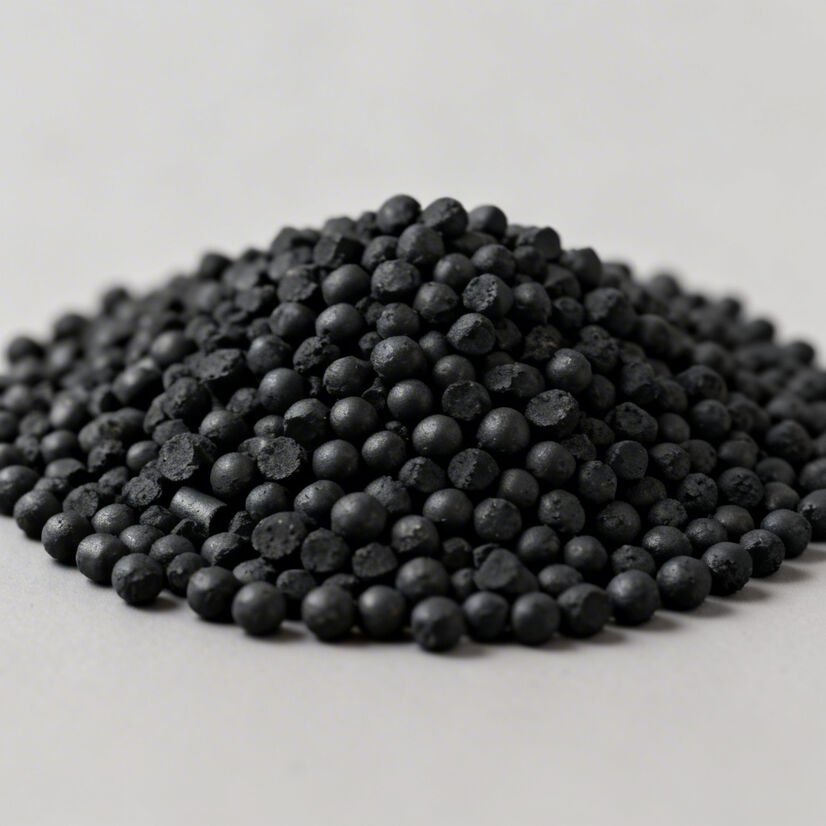
For decades, the global tyre manufacturing industry has relied heavily on virgin carbon black (vCB) derived directly from fossil fuels. However, as net-zero mandates approach and the circular economy becomes a business imperative rather than just a buzzword, the spotlight has shifted toward Recovered Carbon Black (rCB).
But how do manufacturers ensure consistency, purity, and performance when transitioning from vCB to rCB? The answer lies in standardization, specifically ASTM D3053.
Why Standards Matter in Secondary Materials
Historically, one of the biggest bottlenecks preventing wide-scale adoption of recycled materials in compounding and masterbatches has been batch inconsistency. Without a universal standard, every pyrolysis plant produced radically different "black powder", varying wildly in ash content, sulfur, and tensile strength.
"Standards like ASTM D3053 bridge the trust gap between innovative recyclers and traditional industrial manufacturers."
ASTM D3053 provides a rigorous framework defining the standard terminology relating to carbon black, including recovered carbon black. It sets structural parameters that allow our RP-330 and RP-550 grades to smoothly drop-in and replace traditional N330 and N550 materials without requiring massive formula overhauls from our partners.
Key Metrics Outlined by ASTM D3053
When Raviputra engineers dial in the thermal catalytic depolymerization process, they meticulously monitor benchmarks that align with ASTM and REACH compliance:
- Ash Content: Controlled below 0.45% through high-temperature secondary refining to prevent compounding weakness.
- Sulfur Levels: Stripped below 1.1% to conform to strict environmental emission regulations globally.
- Structure & Particle Size: Pelletized specifically to mirror the flowability and dispersion characteristics of vCB.
The Road Ahead
The establishment of clear testing and quality frameworks is the critical foundation that allows the tyre recycling industry to scale globally. At Raviputra Green Energy, we don't just view compliance as a checklist—we view it as our license to revolutionize industrial supply chains.