Our Commitment to a
Greener Future
At Raviputra Green Energy Private Limited, sustainability is not a marketing statement — it is the foundation of everything we do. Our entire business model is built around converting a global environmental problem into commercially valuable, high-performance materials.
The Problem We Are Solving
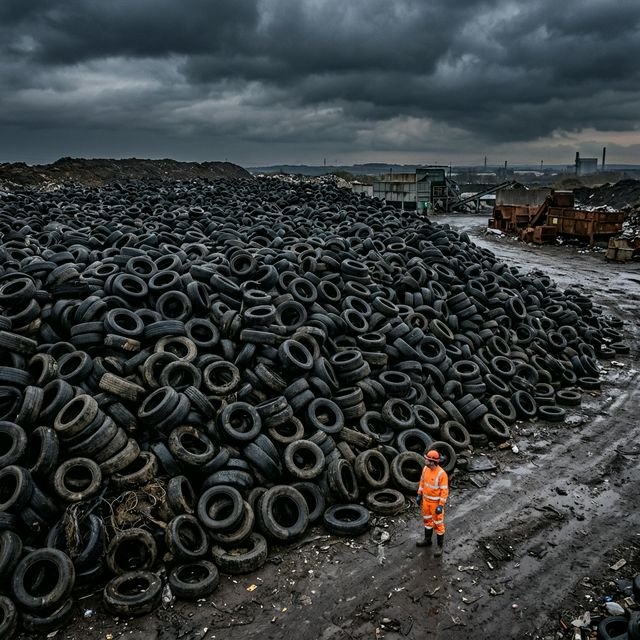
End-of-life tyres (ELTs) are one of the most challenging waste streams on the planet. More than one billion end-of-life tyres are generated worldwide every year — and this number grows continuously as vehicle ownership increases across Asia, Africa, and Latin America. In India alone, millions of tonnes of used tyres accumulate annually, creating serious environmental, health, and land-use problems.
Tyres are engineered for extreme durability. That same durability makes them extraordinarily difficult to dispose of safely:
- Landfilling is banned or restricted in most countries — tyres do not biodegrade and create fire hazards, mosquito breeding grounds, and toxic leachate.
- Open burning releases dioxins, furans, polycyclic aromatic hydrocarbons (PAHs), and black smoke — causing severe air and soil pollution.
- Shredding for fuel (co-processing in cement kilns) recovers some energy but destroys the material value entirely.
Raviputra Green Energy offers a fourth path — one that recovers both material value and energy value from every tyre processed, with minimal emissions and zero landfill waste.
Our Solution: Continuous Pyrolysis Technology
Raviputra Green Energy employs a continuous thermal catalytic pyrolysis process — a thermochemical technology that breaks down the long polymer chains in crumb rubber under precisely controlled temperature conditions in an oxygen-free environment. This process transforms end-of-life tyre material into five distinct, commercially valuable product streams:
- 1. Recovered Carbon Black (rCB)A high-quality, ASTM D3053-compliant material for tyres, plastics, and inks.
- 2. Pyrolysis Fuel Oil (TDF)A low-sulfur synthetic fuel oil (0.8% sulfur).
- 3. Steel Wire ScrapHigh-tensile steel wire cleanly recovered and returned to the supply chain.
- 4. Synthesis Gas (Syngas)Used internally to generate electricity, making operations energy-surplus.
- 5. Sodium Silicate (Raw Glass)A versatile industrial chemical manufactured from syngas.
Environmental Impact
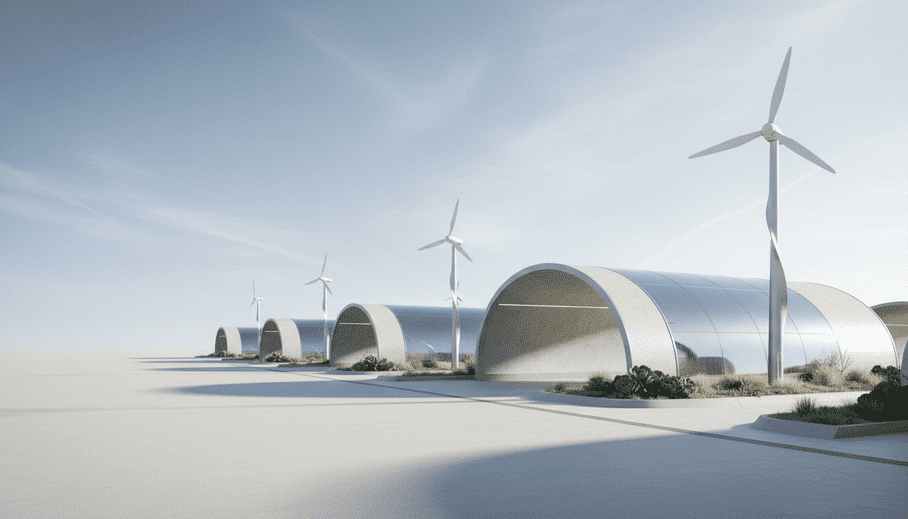
- Carbon Footprint ReductionVirgin carbon black is produced from the incomplete combustion of heavy petroleum oil or natural gas. This process is energy-intensive and carbon-intensive — generating approximately 10 kg of CO₂ per kilogram of virgin carbon black produced.
Recovered carbon black from tyre pyrolysis generates approximately 2 kg of CO₂ per kilogram produced — an 80% reduction in carbon footprint compared to conventional virgin carbon black production. Every tonne of Raviputra rCB delivered to a customer therefore represents a direct, documentable reduction in CO₂ emissions — a measurable ESG benefit that our customers can include in their own sustainability reporting. - Waste DiversionEach tonne of end-of-life tyres processed by Raviputra Green Energy is completely diverted from landfill or open burning. Our process utilises 100% of the ELT feedstock — nothing is discarded.
- Energy EfficiencyOur continuous pyrolysis process is designed to be energy-surplus. The synthesis gas generated within each production cycle is sufficient to power our operations, significantly reducing our dependence on grid electricity and further lowering our operational carbon footprint.
- Reduction in Virgin Material ConsumptionBy producing rCB as a commercially accepted substitute for virgin carbon black, Raviputra Green Energy directly reduces the demand for fossil fuel-derived raw materials. This contributes to the global effort to reduce dependence on heavy oil and natural gas in industrial manufacturing.
Our Circular Economy Model
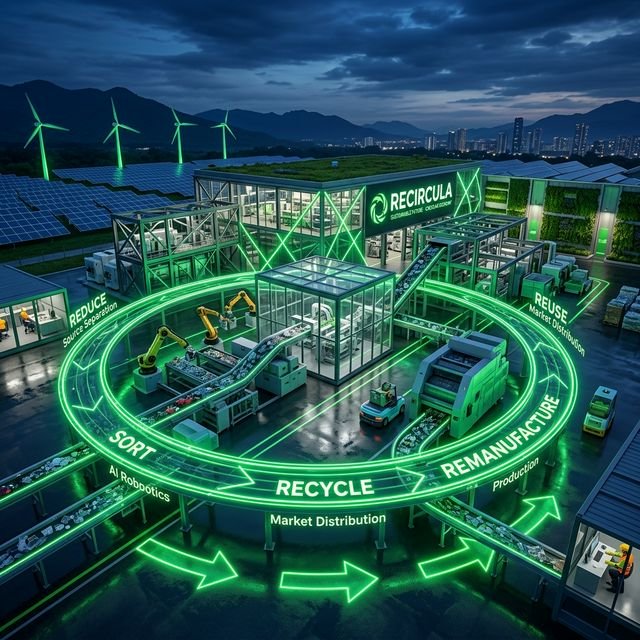
The circular economy principle is simple: keep materials in use for as long as possible, extract maximum value from them while in use, and recover and regenerate products and materials at the end of their service life.
Raviputra Green Energy lives this principle operationally:
Raw material in:
End-of-life tyres — a waste stream with no productive use in conventional recycling chains.
Products out:
- rCB → back into tyre manufacturing, rubber goods, plastics, and coatings
- Fuel oil → back into industrial energy systems
- Steel wire → back into the steel supply chain
- Syngas → converted to electricity powering our facility
- Sodium silicate → into detergents, construction, and water treatment
Net result: A closed-loop material cycle where waste becomes raw material, and nothing is lost to landfill or combustion.
This model aligns directly with India's national circular economy mission, the Extended Producer Responsibility (EPR) framework for end-of-life tyres, and global sustainability goals including the United Nations Sustainable Development Goals (SDGs) — particularly SDG 12 (Responsible Consumption and Production) and SDG 13 (Climate Action).
Quality, Safety & Environmental Standards
Raviputra Green Energy maintains rigorous quality, safety, and environmental management systems across all operations:
ISO 9001:2015
Quality Management System. Ensuring consistent product quality across all rCB grades and production batches.
ISO 14001:2015
Environmental Management System. Systematic identification, monitoring, and control of our environmental impacts.
ISO 45001:2018
Occupational Health & Safety. Protecting the health and safety of our workforce and visitors.
ASTM D3053
All Raviputra rCB grades comply with the ASTM international standard for recovered carbon black.
REACH Compliant
Enabling supply to European customers and facilitating export to EU markets.
EU 10/2011 (RP-665)
Meets EU food contact material regulations — the highest level of regulatory compliance in plastics.
GMP & RoHS
Good Manufacturing Practice auditable environments, and RoHS compliant for sensitive electronics.
Our Sustainability Commitments
- Zero LandfillWe commit to processing 100% of our ELT feedstock into commercially useful products. No tyre material processed at our facility is sent to landfill.
- Continuous ImprovementWe continuously invest in process optimisation — improving rCB yield quality, reducing energy consumption per tonne of output, and minimising process emissions at every stage.
- TransparencyWe provide full technical data, certification documentation, and product traceability for every batch of Raviputra rCB. Our customers can document the sustainability provenance of our material in their own ESG and sustainability reports.
- India's Green Energy TransitionRaviputra Green Energy was founded with a mission aligned to India's national energy and sustainability goals. We are part of the solution to India's growing tyre waste problem — and part of the country's transition to a more resource-efficient, lower-carbon industrial economy.
- PartnershipWe welcome partnerships with ELT collectors, tyre manufacturers, rubber goods producers, and industrial buyers who share our commitment to sustainability. Together, we can scale the impact of recovered carbon black and make circular economy materials the norm rather than the exception.
The Global rCB Opportunity
The global market for recovered carbon black is growing rapidly — driven by tightening environmental regulations, corporate sustainability commitments, and the commercial performance of modern rCB grades. Leading global tyre manufacturers including Bridgestone, Continental, Pirelli, and Nexen have already committed to incorporating rCB into their production, with targets to increase recycled content year on year.
India's EPR framework for end-of-life tyres creates a strong structural tailwind for domestic rCB producers like Raviputra Green Energy — ensuring a reliable feedstock supply while incentivising the use of recovered materials in new tyre production.
The opportunity is clear. The technology is proven. The demand is growing. Raviputra Green Energy is positioned to be a leading domestic producer of high-quality recovered carbon black — contributing to India's circular economy and helping industries across the country reduce their environmental footprint.
Overall Sustainability Statement
The utilisation of Raviputra Carbon presents a sustainable and economically viable solution for reducing waste, conserving resources, and promoting a circular economy — while fully meeting the performance requirements of every industry we serve. We are proud to be India's specialist supplier of environment-friendly recovered carbon black that is commercially accepted as a substitute for major industrial grades. All Raviputra Carbon grades are pelletised and shipped in standard bags or super sacks, available for both domestic and export supply.